
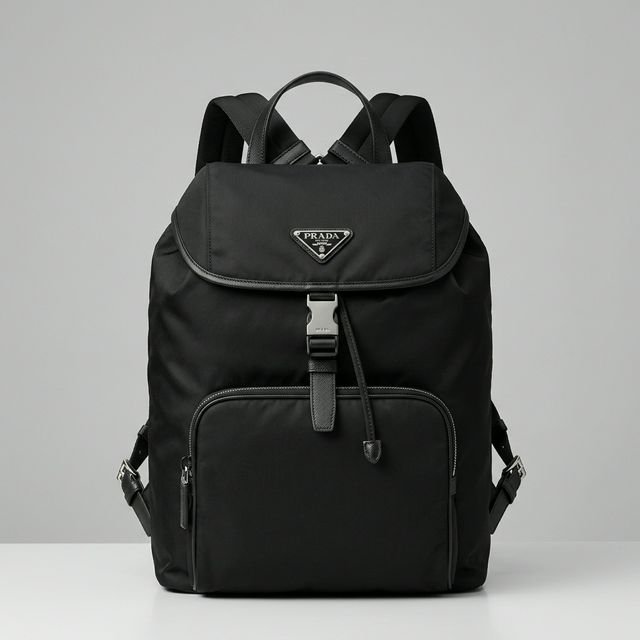
Prada is the brand of choice for the fashion intellectual, a house built on the concept of ‘ugly-chic’ and a rejection of traditional luxury tropes. Since taking the reins in 1978, Miuccia Prada has transformed the family leather goods business into a multi-billion dollar empire that dictates global trends. Her most radical move was the introduction of the black nylon backpack in 1984. By using ‘Pocone’ nylon—a durable fabric used for military parachutes—Prada challenged the idea that luxury must be made of precious materials. The minimalist triangle logo became a badge of understated status.
The Prada aesthetic is defined by a focus on tailoring, uniform-like silhouettes, and unexpected textures. Miuccia’s collaborate with Raf Simons has further refined this vision, blending Prada’s heritage with Simons’ modernist, youth-culture-inspired sensibilities. The result is a series of collections that feel both nostalgic and futuristic. From the iconic loafers with heavy rubber soles to the perfectly proportioned A-line skirts, Prada pieces are designed for longevity. They are clothes for people who value substance over spectacle, and who understand that the most powerful form of luxury is often the most discreet.
Innovation at Prada extends to its retail spaces as well. The ‘Epicenters’ created in collaboration with architects like Rem Koolhaas are more than just stores; they are cultural hubs that explore the relationship between shopping, technology, and art. This holistic approach to branding ensures that Prada remains at the center of the cultural conversation. Whether it is through the Prada Foundation’s extensive art collection or the brand’s commitment to sustainable materials like Re-Nylon, Prada proves that a luxury brand can be both commercially successful and intellectually rigorous in the twenty-first century.
Discussion