
In 1955, Gabrielle “Coco” Chanel did something radical. She took the handbag — long a cumbersome accessory carried in the crook of the arm — and set it free. She quilted it, chained it, and slung it over the shoulder. The 2.55 was born: February, 1955, hence the name. Nearly seventy years later, the bag remains not just relevant, but totemic. A cultural artifact as much as a fashion accessory.
The Anatomy of an Icon
Every element of the 2.55 was engineered with purpose. The Burgundy lining — a precise shade chosen because it matched the colour of the uniforms at the orphanage where Chanel was raised — is a detail so specific it borders on the poetic. The double-chain strap, radical in 1955, is now so ubiquitous it has become the universal shorthand for “luxury bag.” The rectangular CC turn-lock clasp, added to later iterations, has become one of fashion’s most recognisable logos.
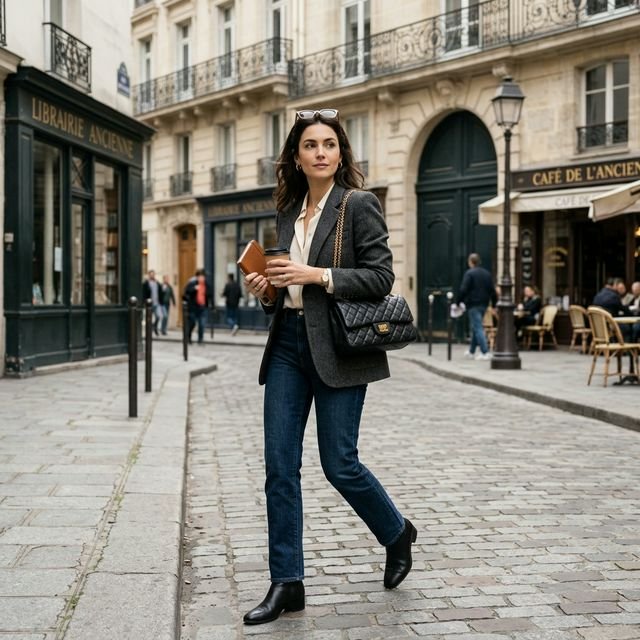
The quilting itself deserves its own essay. Inspired by the diamond-pattern jackets worn by Chanel’s male compatriots — jockeys, athletes, soldiers — the matelassé stitching transforms supple lambskin into something almost architectural. Run your fingers across it and you feel both the give of the leather and the resistance of the padding beneath. It is at once luxurious and structured — a metaphor, perhaps, for the woman Chanel always had in mind.
The Craft Behind the Clasp
Inside each Chanel atelier, a single artisan is responsible for every stage of a bag’s construction. This is not assembly-line production — it is individual authorship. The stitching must meet exacting tolerances: 11 stitches per centimetre on the body, the diamond pattern precisely aligned at every intersection. The chain weaving, done by hand, requires both patience and considerable strength. A skilled artisan can complete one bag per day. No more.
“I invented my life by taking for granted that everything I did not like would have an opposite, which I would like.” — Coco Chanel
To own a Chanel 2.55 is to own a piece of cultural history — but more than that, it is to carry something that was designed with genuine intent. Coco Chanel was not making a bag to be photographed. She was making a bag to be lived in: to hold a lipstick, a compact, a love letter. The 2.55 was, above all, practical — which is perhaps the most radical thing of all.
Decades of creative directors — Karl Lagerfeld, now Virginie Viard — have reinterpreted the 2.55 endlessly, in python, tweed, sequins and denim. Yet the essential geometry never changes. Because some things, once perfected, simply cannot be improved. They can only be celebrated.