
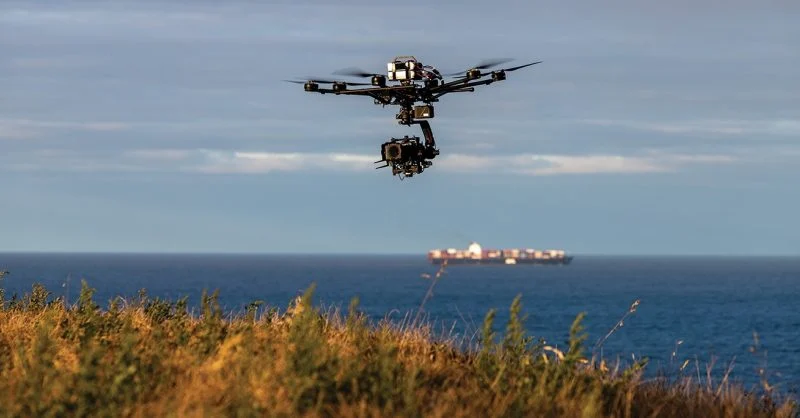
In a span of barely a decade, DJI has established a near-monopoly on civilian airspace, fundamentally altering the way humanity visualizes its world. Based in Shenzhen, DJI did not merely create the consumer drone market; they perfected it. Before the Phantom and the Mavic, aerial photography was the exclusive domain of Hollywood studios equipped with helicopters and massive budgets. DJI miniaturized the complex algorithms required for stable flight, gimbal stabilization, and obstacle avoidance, placing the power of an entire film crew into a device that folds down to the size of a water bottle. They have made the impossible, ordinary.

Algorithmic Flight and Robotic Precision
The true genius of DJI lies not just in their hardware, but in their software. The Mavic series utilizes an omnidirectional binocular vision system to map its environment in extreme 3D detail, allowing the drone to navigate through dense forests or track a fast-moving subject with autonomous, robotic precision. The Hasselblad-branded sensors equipped on their flagship models—born from their acquisition of a majority stake in the legendary Swedish camera manufacturer—deliver unprecedented dynamic range and color science from the sky. It represents a perfect synthesis of aerospace engineering and advanced optics.
DJI’s influence extends into the highest echelons of professional filmmaking. Their Ronin series of cinema gimbals and the Inspire drones are the primary tools used on global blockbuster sets, offering a level of dynamic control that traditional cranes and dollies cannot achieve. Furthermore, DJI’s enterprise division is revolutionizing agriculture, search and rescue, and infrastructure inspection. They are not merely an electronics company; they are a pioneering force in spatial robotics, relentlessly pushing the boundaries of what automated, intelligent hardware can achieve in the three-dimensional space.