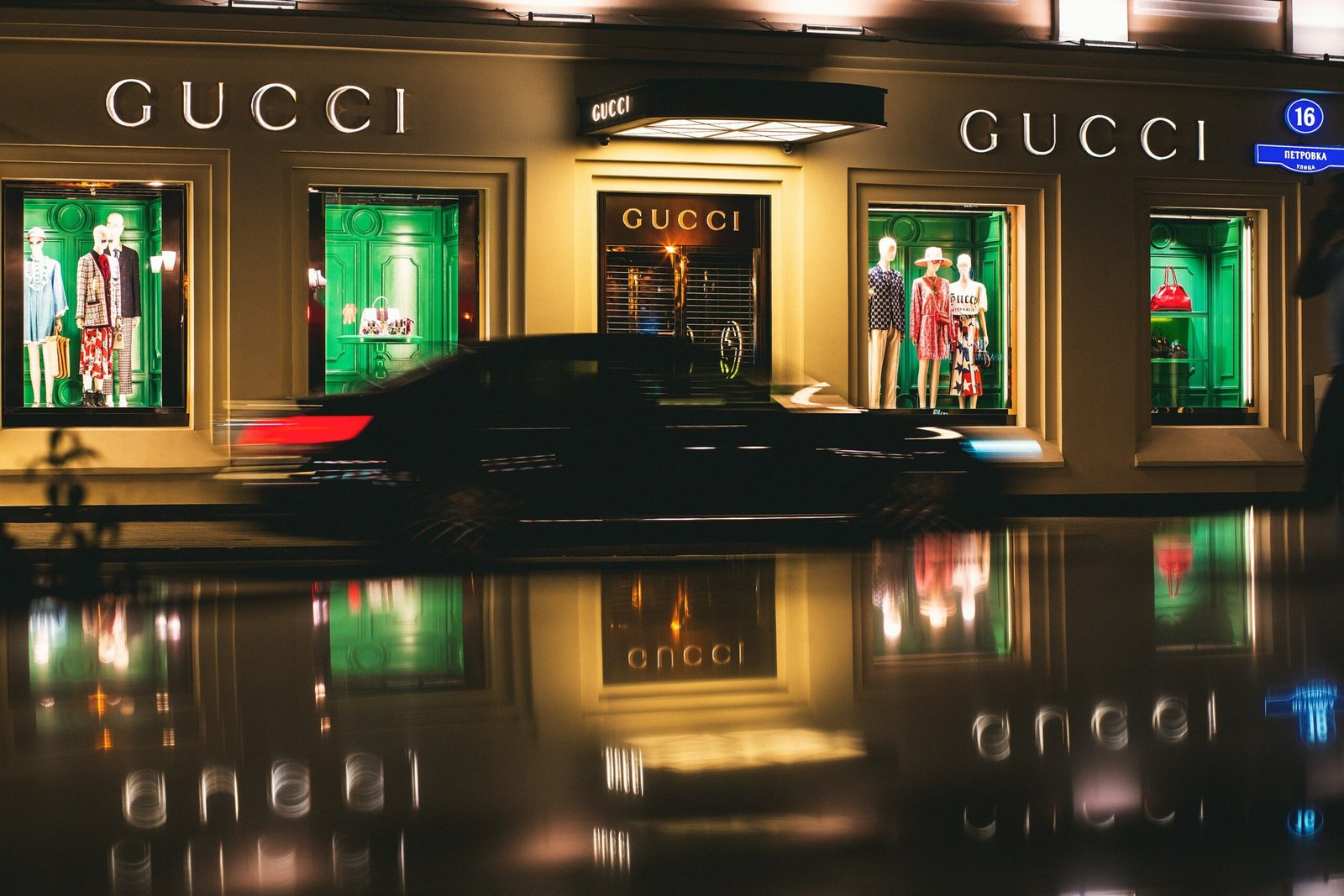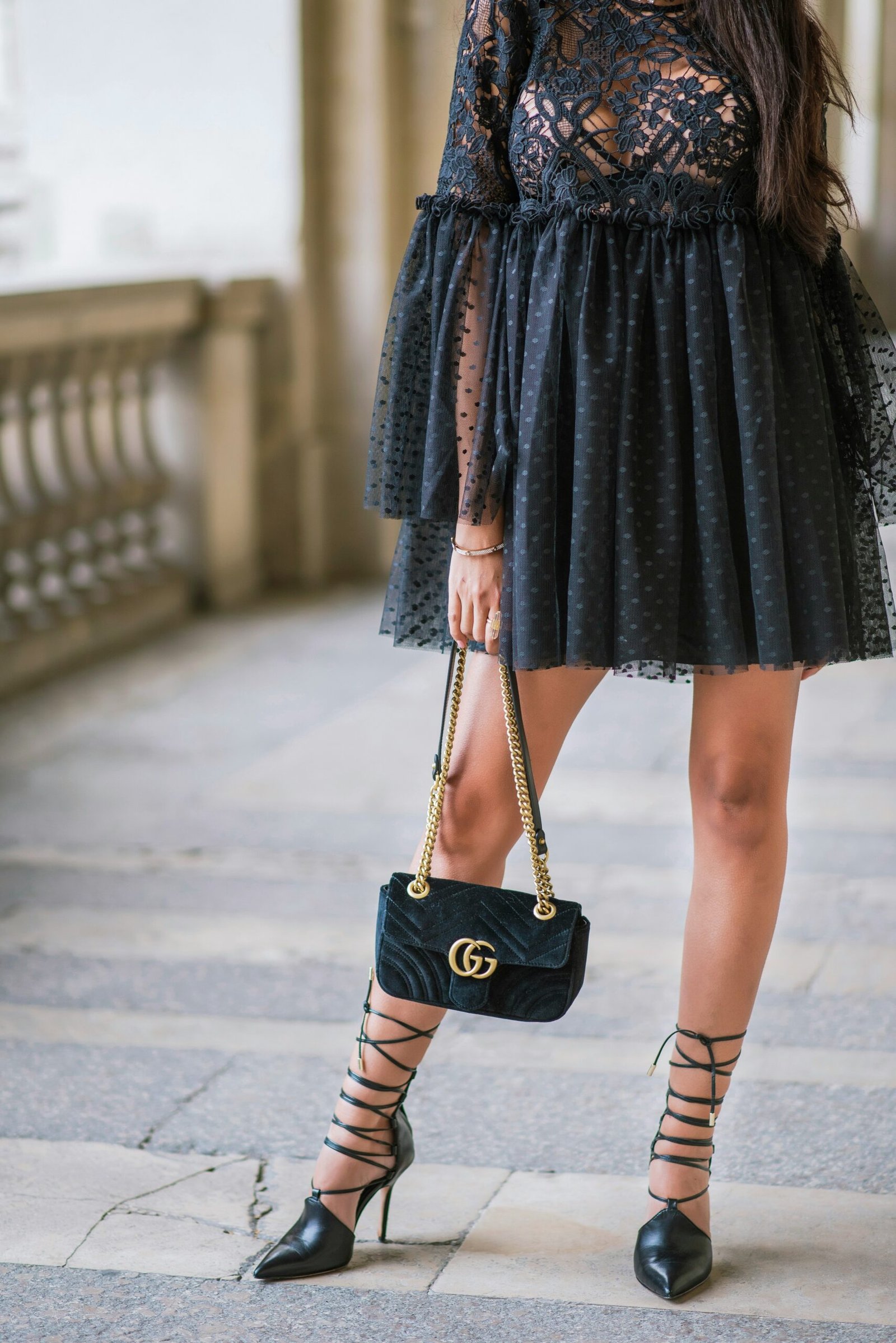
Founded in Florence in 1921, Gucci is the pinnacle of Italian luxury, blending equestrian heritage with a daring, maximalist aesthetic. After a period of decline, the brand was revitalized in the 1990s by Tom Ford and later reached new heights of eccentric creativity under Alessandro Michele. Today, Gucci is a house that celebrates individuality, gender fluidity, and a ‘more-is-more’ philosophy. The interlocking GG logo, double-stripe webbing, and the horsebit loafer are global icons that signify a connection to artisanal excellence and bold self-expression.
One of Gucci’s most beautiful traditions is the ‘Flora’ print. Originally commissioned for Princess Grace of Monaco in 1966, the pattern features 43 varieties of flowers and insects in a vibrant, colorful composition. This motif has been woven into the brand’s DNA, appearing on silk scarves, ready-to-wear collections, and accessories. It represents the softer, more romantic side of the Gucci identity, balancing the brand’s rock-and-roll edge. The Flora pattern is a reminder of Gucci’s ability to transform nature into high art, a theme that continues today in the brand’s lush runway presentations.
Gucci’s commitment to craftsmanship remains at the core of everything it does. The brand’s leather goods, particularly the Jackie and Bamboo bags, are crafted using techniques that have been passed down through generations of Florentine artisans. However, Gucci is also a leader in digital fashion and sustainability, launching initiatives like ‘Gucci Equilibrium’ to reduce its environmental footprint. By bridging the gap between century-old traditions and the future of fashion, Gucci ensures its place as one of the most exciting and influential brands in the world, a true icon of Italian style and innovation.