
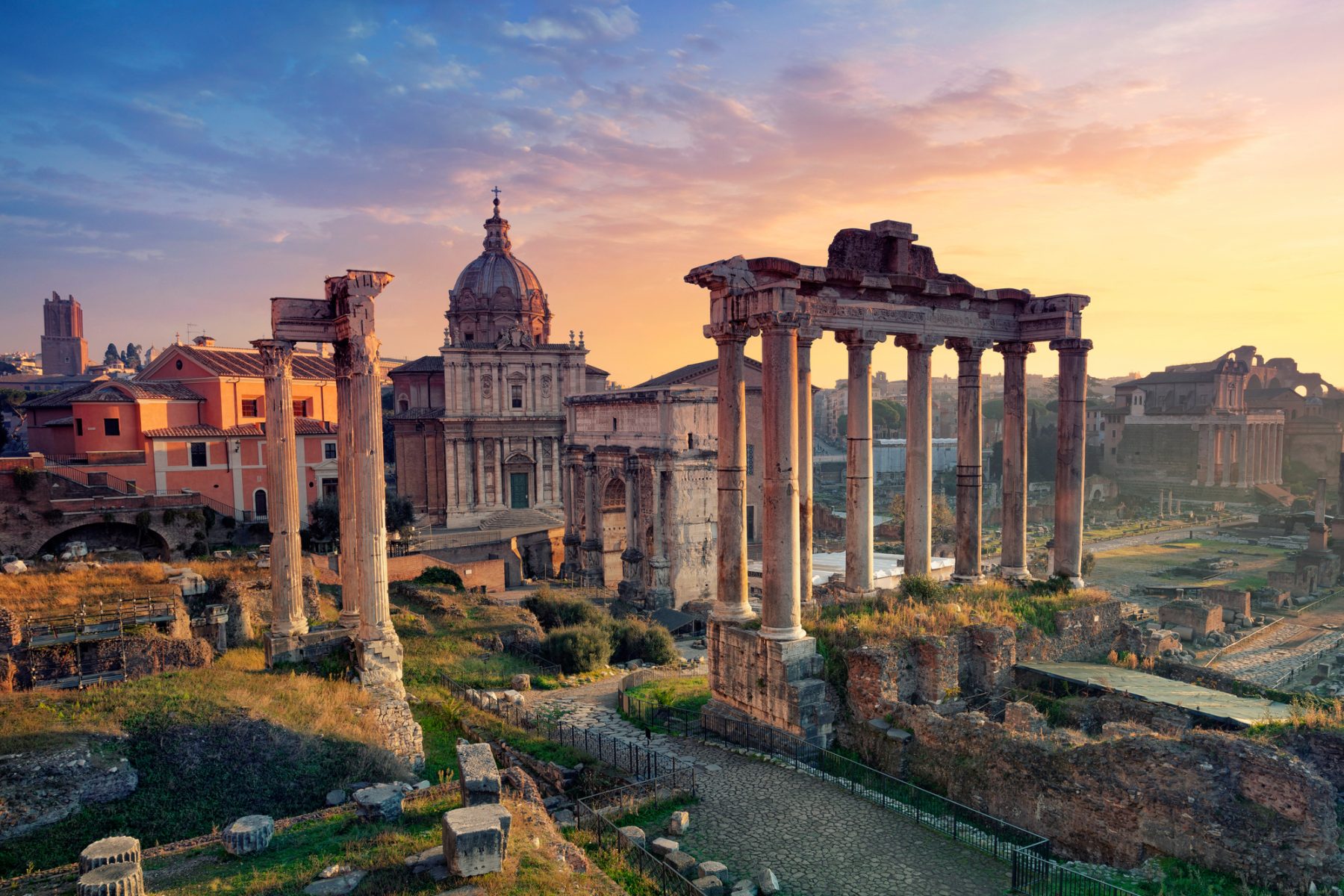
Rome is a city where time collapses. Walking through the Roman Forum is to step directly into the heart of an empire that shaped the Western world. It is a living museum, where Baroque fountains play against the backdrop of Renaissance palazzos and ancient ruins stand defiantly amidst the roar of modern Vespas. The city’s history is not behind glass; it is under your feet, above your head, and in the very walls of the trattorias where Romans have dined for generations. Standing in the center of the Colosseum, one can almost hear the roar of the crowds and the clash of steel, a visceral reminder of a history that remains raw and powerful.
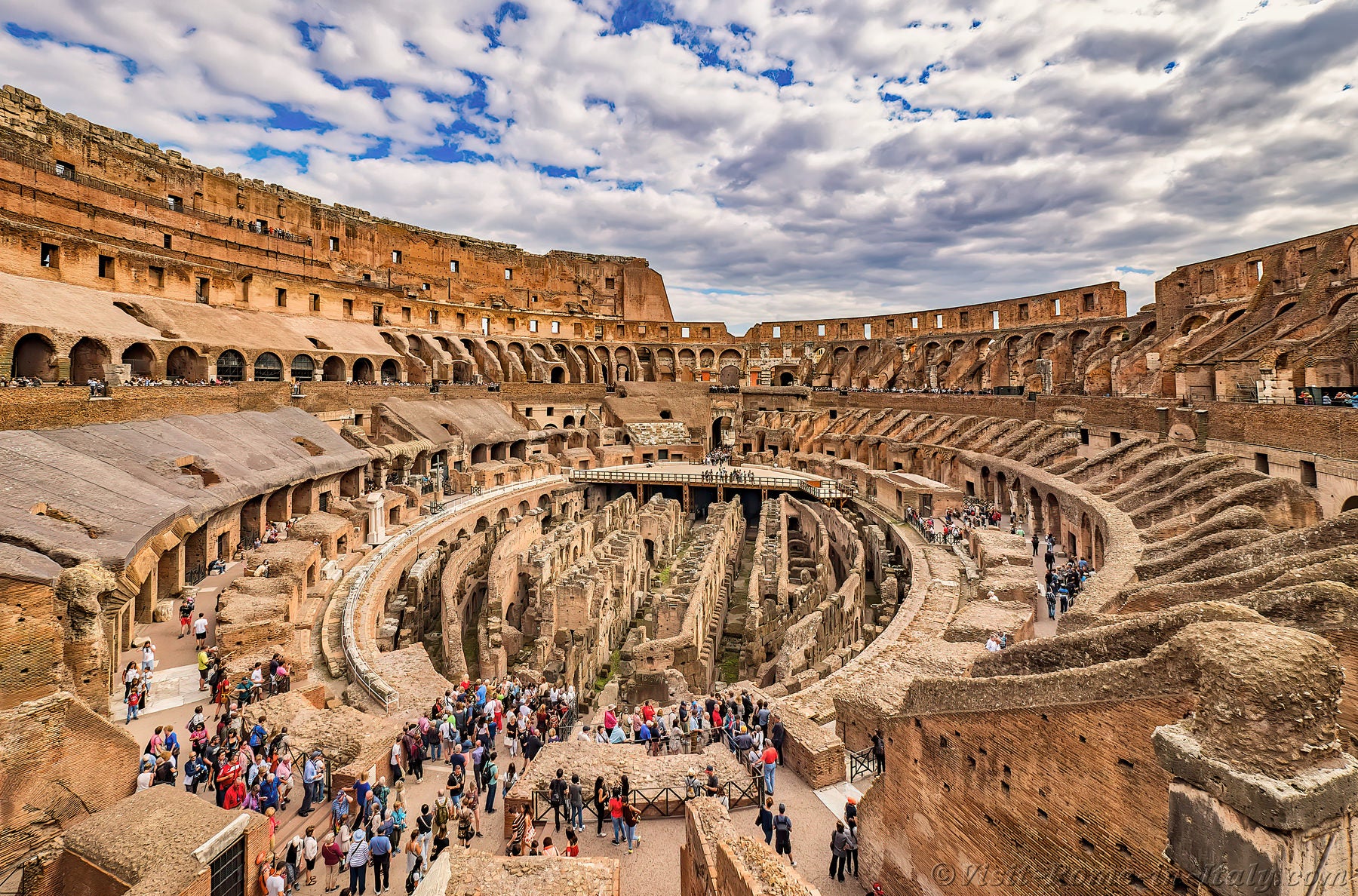
The Colosseum: A testament to the architectural ambition of the Flavian dynasty.
Spiritual Grandeur
The Vatican City, a sovereign state within Rome, offers a level of artistic and spiritual concentration found nowhere else. Michelangelo’s frescoes in the Sistine Chapel and the immense scale of St. Peter’s Basilica are reminders of a time when art was the primary language of the divine. To stand beneath the dome of the Pantheon is to feel the weight of nearly two thousand years of human ingenuity, its oculus providing a direct, dramatic connection between the heavens and the earth. Every church in Rome is a treasury, holding masterpieces by Caravaggio and Bernini that are free to all who enter.
The Roman lifestyle, the “La Dolce Vita,” is centered around the piazza. These public stages, like the Piazza Navona and the Campo de’ Fiori, are the social lungs of the city. Here, life is lived in the open, with spirited debates over espresso and the evening “passeggiata” providing a rhythmic constant to the day. Roman cuisine is a celebration of “cucina povera”—the kitchen of the poor—turned into high art. The quartet of Roman pastas—Cacio e Pepe, Carbonara, Amatriciana, and Gricia—rely on a few perfect ingredients: pecorino romano, guanciale, and black pepper.
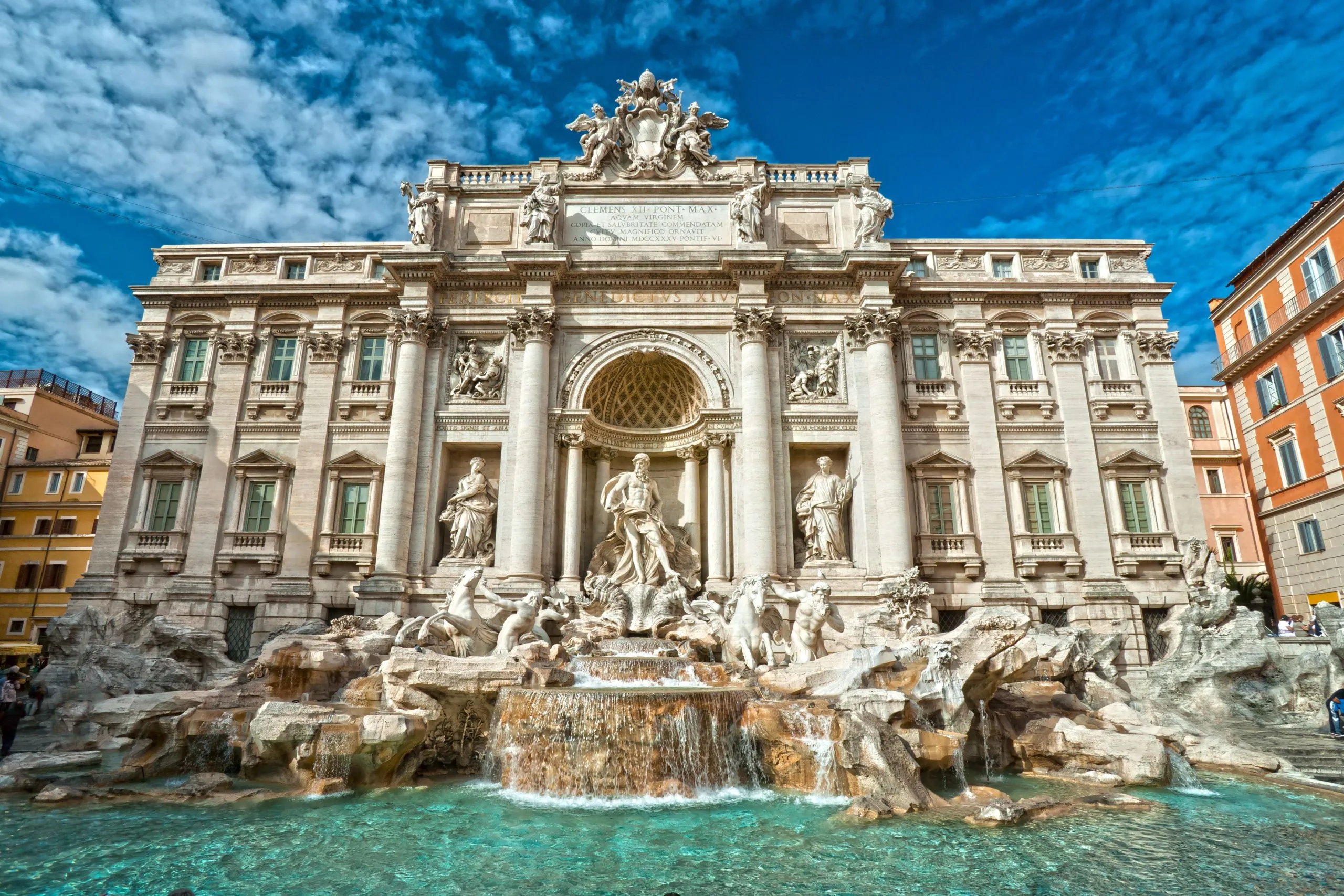
Trevi Fountain: Tossing a coin into the waters to ensure a return to the Eternal City.
“Rome is the city of echoes, the city of illusions, and the city of yearning.” — Giotto de Bondone
Gastronomic Simplicity
In the quiet streets of Trastevere, the ivy-covered buildings and hidden gardens offer a glimpse into a more intimate Rome. The city is a sensory overload of sensory details: the sound of water splashing in thousands of fountains, the scent of roasting artichokes in the Ghetto, and the vibrant golden hue of the sunset reflecting off the Tiber. Rome does not ask for your attention; it commanded it two thousand years ago and has never let go, proving that while empires fall, the Eternal City remains the heartbeat of the Mediterranean.